
Learning how to rank your business in ChatGPT and Google AI Overviews has become an important part of digital visibility in 2026. Customers now ask conversational questions such as “Which web design agency is best for a small business?” or “Who can create professional Meta ad visuals?” and may receive an answer before they ever open a traditional list of search results.
There is no button that guarantees an AI recommendation. ChatGPT, Google AI Overviews and other answer engines can use different sources for different questions, locations and users. However, a business can make its website easier to discover, understand, trust and cite. This guide explains the practical work that supports both traditional SEO and visibility in AI-generated answers.
Can a Business Really “Rank” in ChatGPT?
Not in exactly the same way that a page holds a numbered Google position. ChatGPT Search can select and cite sources that help answer a particular prompt. The sources may change when the wording, context, freshness requirement or user location changes. A better goal is to increase the chance that your brand is accurately understood, included and cited for the questions your ideal customers ask.
OpenAI explains that OAI-SearchBot is used to surface websites in ChatGPT search results. Allowing that crawler is an eligibility step, not a promise of inclusion. OpenAI also distinguishes OAI-SearchBot from GPTBot, which is associated with model training. Businesses should review each crawler deliberately rather than treating every AI bot as the same thing.
SEO, AEO and GEO: What Is the Difference?
SEO improves visibility in search engines. AEO, or answer engine optimisation, focuses on becoming a useful answer in search features and assistants. GEO, or generative engine optimisation, is a newer label for improving how generative systems understand and mention a brand.
The labels are useful for planning, but they should not distract from solid foundations. Google’s official guidance for generative AI search says established SEO practices remain relevant because AI features are rooted in its core search and quality systems. In practical terms, a technically weak, unclear or untrustworthy website will not be rescued by adding “GEO” to a proposal.
How to Rank Your Business in ChatGPT and Google AI Overviews: 10 Steps
1. Build a clear business entity
AI systems need consistent information about who you are, what you offer, where you operate and which customers you serve. Use the same business name, service descriptions, website address and contact details across your website and reputable profiles. Avoid changing your core description on every platform merely to fit more keywords.
Your homepage and About page should state the business category, audience, main services and service area in plain language. Dedicated service pages should explain each offer in enough detail to stand alone. A professional website design service can organise this information into a clear hierarchy that works for people, crawlers and AI systems.
2. Confirm that important crawlers can access the site
Check robots.txt, firewall rules, CDN settings and security plugins. Important pages should be accessible to Googlebot and, if ChatGPT search visibility is a goal, OAI-SearchBot. Do not assume a page is accessible simply because it opens in your own browser; bot protection can block crawlers while allowing normal visitors.
Keep XML sitemaps current and submit them through Google Search Console and Bing Webmaster Tools. Make sure priority pages return a successful status, use indexable canonical URLs and are not accidentally marked noindex. Our SEO-friendly website design checklist covers the technical foundation in more detail.
3. Create one strong page for each important service and intent
A single generic Services page rarely answers every buyer question well. Create focused pages for distinct offers such as website design, branding, content writing, Google Ads management or AI-assisted ad creative. Each page should explain the problem, process, deliverables, suitable client, proof and next step.
Avoid producing dozens of near-identical pages for tiny keyword variations. One comprehensive page supported by genuinely useful related articles is easier to maintain and more credible. Use internal links to connect problem-aware blog readers with the most relevant service rather than sending every visitor to the homepage.
4. Answer real customer questions directly
AI search is conversational, so research the questions customers ask before buying. Useful examples include cost, timing, alternatives, risks, suitability and expected results. Put a concise answer near the beginning of the relevant section, then add evidence, context and exceptions.
Use descriptive headings rather than clever labels that hide the subject. A question such as “How much does a small business website cost?” is clearer than “Let’s talk numbers.” The Visual Spark’s guide to small business website costs is an example of matching a direct business question with a detailed, decision-focused answer.
5. Add original evidence and first-hand expertise
Generic summaries are easy to reproduce and difficult to distinguish. Strengthen content with original examples, screenshots, process notes, before-and-after comparisons, anonymised client lessons, tested checklists and clear professional opinions. Explain what worked, what failed and under which conditions.
Identify the author or reviewing expert and keep claims proportionate to the evidence. Cite primary sources for platform rules, technical standards and data. Google’s guidance on helpful, reliable, people-first content encourages creators to demonstrate real expertise and serve the reader rather than manufacture pages only to attract search traffic.
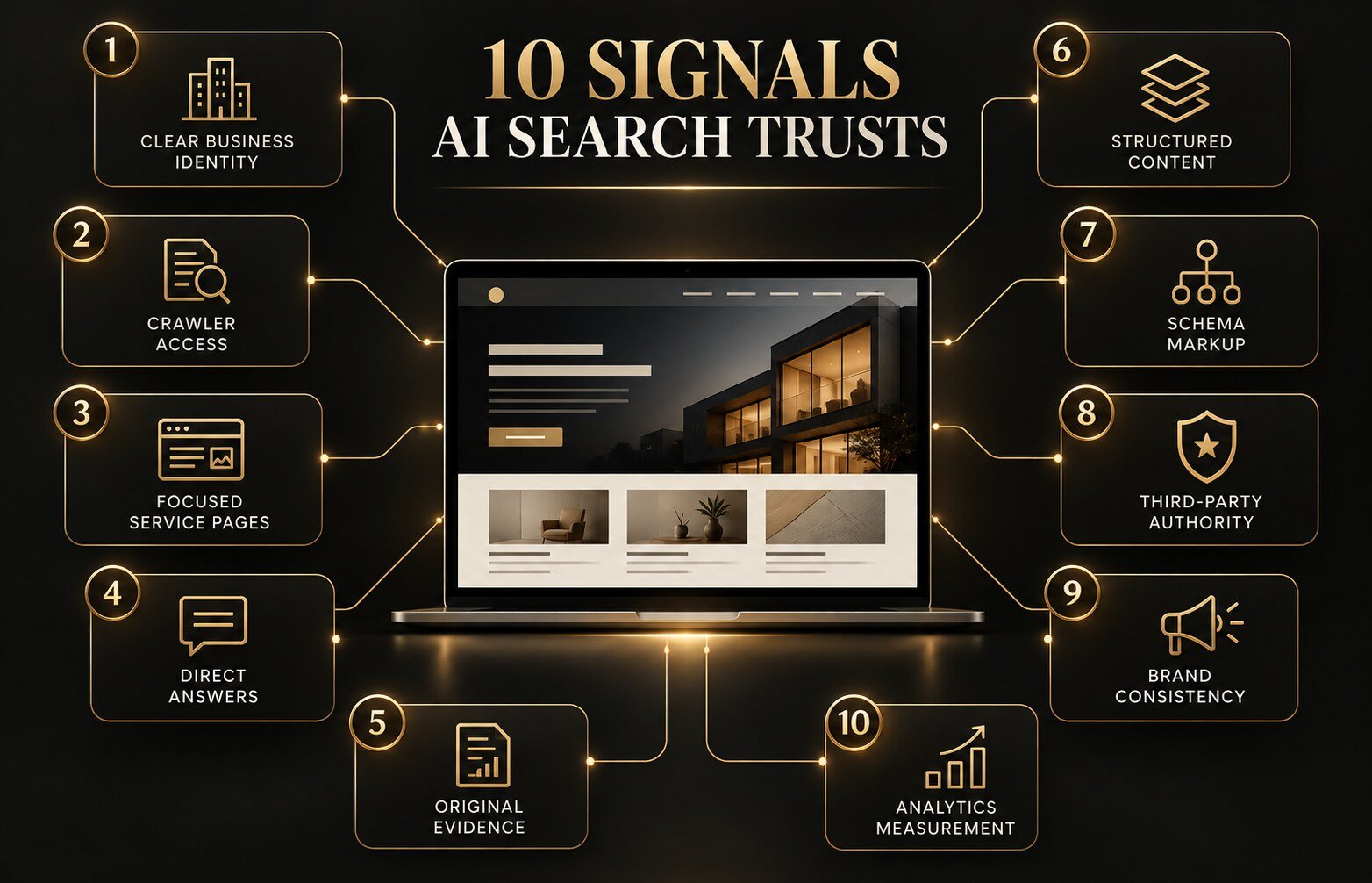
6. Structure content so answers are easy to extract
Good structure benefits both readers and machines. Use one clear H1, logical H2 and H3 headings, short paragraphs, descriptive lists, comparison tables and meaningful image alt text. Define a term before discussing advanced details, and keep the subject of each section focused.
Do not reduce every article to robotic question-and-answer fragments. A strong page can provide concise answer blocks while still explaining nuance, limitations and practical application. Professional content and copywriting support helps balance search clarity with a natural, persuasive brand voice.
7. Use accurate structured data
Structured data gives search engines machine-readable information about pages and entities. Depending on the website, useful types may include Organization, LocalBusiness, Service, Article, Product, Review or BreadcrumbList. Google states that it uses structured data to understand page content and potentially support richer search appearances.
Markup must match the visible content. Do not add fabricated reviews, locations or services, and do not expect schema to compensate for a weak page. Validate eligible markup with Google’s Rich Results Test and monitor Search Console for errors.
8. Strengthen third-party authority and corroboration
A business becomes easier to trust when reliable sources beyond its own website confirm that it exists and does what it claims. Maintain accurate profiles on relevant industry platforms, professional networks and business directories. Earn genuine reviews, expert mentions, interviews, case-study partnerships and links from appropriate publications.
Quality matters more than mass submission. Hundreds of low-value directory listings or paid mentions can create inconsistent data and spam signals. Focus on sources that real customers in your market would recognise and use.
9. Keep your brand and content consistent
If one profile calls the company a web developer, another says advertising agency and the website describes only graphic design, systems may struggle to understand the primary offer. Define a consistent category, short description and service vocabulary while allowing each page to address a specific audience need.
Visual and verbal consistency also helps people recognise the business after an AI answer introduces it. A documented brand style guide keeps logos, colours, messaging and tone aligned across the website, proposals, ads and social profiles.
10. Measure AI visibility and improve the source pages
Track outcomes rather than checking one prompt once. OpenAI notes that ChatGPT search referral links include a utm_source=chatgpt.com parameter, which can help identify visits in analytics. Google has also introduced dedicated reporting for visibility in generative AI search features within Search Console.
Create a repeatable list of important buyer questions and review which brands and sources appear. Record mentions, citations, referral visits, assisted conversions and enquiries. When a competitor is repeatedly selected, compare the clarity, evidence, freshness and external authority of its source pages—not just its keyword count.
What Does Not Guarantee AI Search Visibility?
- Adding “AEO” or “GEO” repeatedly to otherwise weak content.
- Publishing large volumes of unreviewed AI-generated articles.
- Using unsupported statistics or invented customer stories.
- Creating duplicate pages for every minor keyword variation.
- Adding schema that does not match the visible page.
- Allowing a crawler while blocking the page from normal search indexing.
- Buying irrelevant mentions, directory listings or backlinks.
- Expecting one prompt test to represent every user and location.
AI Search Visibility Checklist
- Business name, category, services and contact details are consistent.
- Priority pages are crawlable, indexable and included in the XML sitemap.
- OAI-SearchBot access has been reviewed intentionally.
- Each major service has a clear, useful and original page.
- Articles answer real buyer questions with concise opening answers.
- Claims are supported by first-hand evidence or primary sources.
- Headings, lists, tables and alt text make content easy to understand.
- Structured data is accurate, validated and visible-page compliant.
- Relevant third-party profiles and mentions confirm the brand.
- Analytics and Search Console are used to measure progress.
Frequently Asked Questions
How long does it take to appear in ChatGPT search?
There is no guaranteed timeline. Discovery depends on crawl access, indexing, the quality and relevance of the page, source freshness, external authority and the specific question being asked. Technical access may be corrected quickly, but building trustworthy authority usually takes longer.
Does an llms.txt file make a website rank in AI answers?
No file guarantees selection or citation. Treat emerging files and protocols as optional supporting mechanisms, not replacements for crawlable pages, clear content, standard sitemaps, structured data and credible external signals.
Is traditional SEO still necessary for Google AI Overviews?
Yes. Google explicitly states that its established SEO guidance remains relevant to AI features. Pages still need to be accessible, indexed, useful and trustworthy before they can be considered for these experiences.
Can a small business compete with large brands in AI search?
Yes, especially for specific services, locations, industries and detailed questions where the business has genuine expertise. A focused small business can publish clearer evidence and more useful niche answers than a large general website, although competitive markets still require consistent work and credible mentions.
Make Your Business Easier for People and AI to Trust
The most sustainable way to rank your business in ChatGPT and Google AI Overviews is to become a clear, accessible and well-supported source—not to chase a secret prompt-engineering trick. Build strong service pages, answer real questions, show original expertise, use accurate technical signals and earn genuine authority across the web.
The Visual Spark is a UK-based creative studio serving clients worldwide with website design, content, branding, digital marketing and AI-assisted creative support. Explore our digital marketing services, view all creative services or contact The Visual Spark to build a clearer and more discoverable digital presence.
Leave A Comment