
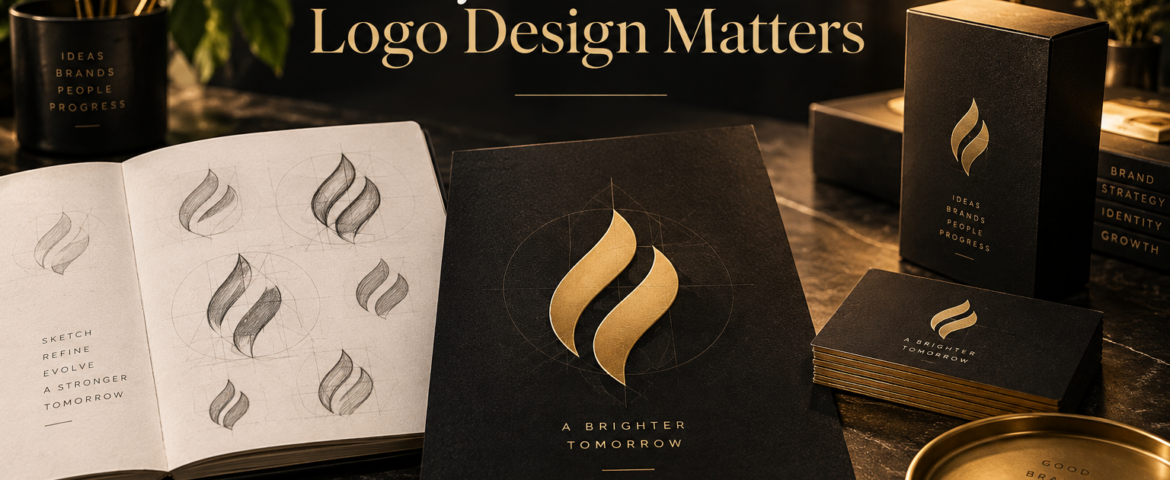
For a small business, a logo is often the first visible proof that the brand is real, credible and worth remembering. It appears on your website, social profiles, packaging, proposals, invoices and ads. When that mark looks generic or inconsistent, potential customers may make the same assumption about the business behind it. That is why professional logo design for small business is not a cosmetic extra—it is a practical investment in trust, recognition and growth.
A strong logo cannot replace a good product or service, but it can help people notice, understand and remember that value. Here is what professional logo design contributes to a growing business and what to look for when you are ready to build a stronger identity.
What Professional Logo Design Really Means
Professional logo design is more than choosing an attractive font and adding an icon. It begins with strategy: who the business serves, what it promises, how it should feel and how it differs from competitors. A designer then translates those ideas into a clear visual system that works at every size and across multiple channels.
The finished logo should be distinctive, relevant and technically usable. It needs to look sharp on a mobile screen, remain legible on a business card, reproduce cleanly in one colour and scale confidently for signage. It should also come with the right file formats, colour references and usage guidance so your team can apply it consistently.
7 Reasons Professional Logo Design Matters for Small Businesses
1. It creates a stronger first impression
People form opinions quickly. Before they read your About page or compare your services, they notice how your brand presents itself. A polished logo signals care, stability and professionalism. It tells visitors that the business pays attention to detail—an especially important message when you are new, local or competing against larger companies.
2. It builds credibility and customer trust
Trust is essential when a customer has never worked with you before. A poorly drawn or inconsistent logo can create hesitation, while a considered identity makes the business feel established. The goal is not to look expensive; it is to look intentional. When your website, social media and documents all carry the same recognisable mark, customers feel they are dealing with one coherent organisation.
3. It makes your brand easier to remember
Customers may forget a company name, but they often remember a shape, colour or visual idea. Professional designers simplify the right elements so the logo is easier to recognise at a glance. Repetition then turns that recognition into memory. Over time, a clear logo helps your business occupy a small but valuable place in the customer’s mind.
4. It helps you stand apart from competitors
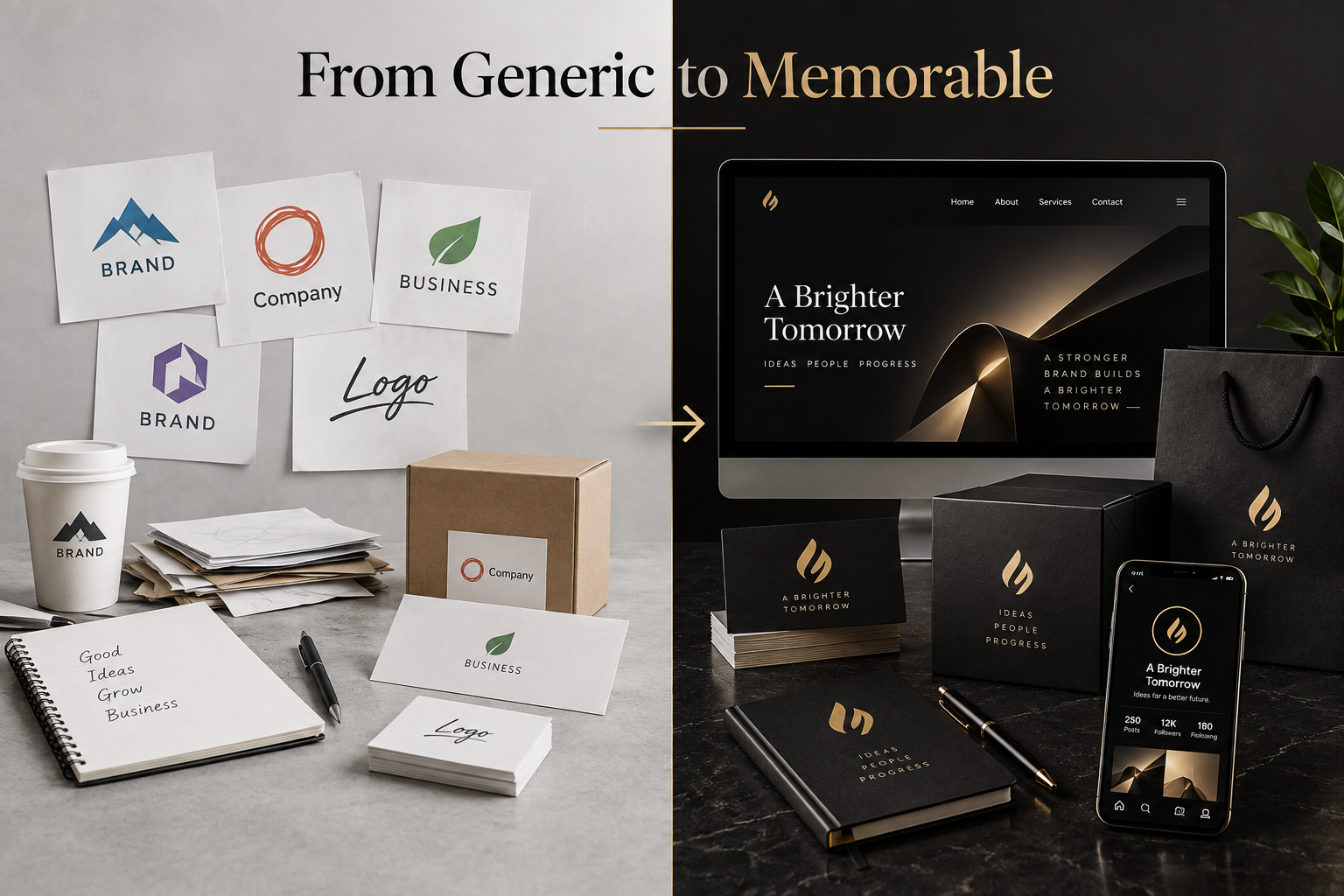
Many small businesses use the same template icons, popular typefaces and predictable colour combinations. The result is a market full of brands that look interchangeable. A custom logo gives you a visual point of difference grounded in your positioning. It helps customers distinguish your company without relying on louder advertising or lower prices.
5. It supports consistency across every touchpoint
A logo is the anchor of a wider visual identity. Its colours, typography and style influence everything from social media graphics to website buttons and printed materials. With professionally prepared files and simple brand guidelines, employees and suppliers can create materials that look connected. This consistency reinforces trust and makes every marketing effort more effective.
6. It gives your business room to grow
A quick DIY logo may work for a first social profile, then fail when the business expands into packaging, events, e-commerce or new service lines. Professional logo design anticipates those needs. Primary and secondary logo variations, icons, monochrome versions and scalable vector files make the identity flexible without losing recognition.
7. It saves time and money over the long term
Cheap logos can become costly when files are missing, artwork cannot be enlarged or trademark conflicts force a redesign. Rebuilding every sign, profile and brochure later creates unnecessary expense. Investing in a considered identity early reduces rework and gives your marketing a reliable foundation.
What Makes a Good Small-Business Logo?
An effective logo should meet several practical standards:
- Simple: It remains clear without unnecessary detail.
- Relevant: Its tone suits the audience and industry without copying clichés.
- Distinctive: It is easy to tell apart from competing brands.
- Versatile: It works in colour, black and white, small formats and large applications.
- Timeless: It can evolve without depending completely on a short-lived trend.
- Legible: The name and symbol remain understandable wherever they appear.
The best solution is not always the most decorative one. It is the one that communicates the brand clearly and performs reliably in the real world.
Signs Your Business May Need a New Logo
You may not need a redesign simply because your logo is old. Change becomes worthwhile when the current identity is holding the business back. Common warning signs include:
- Your logo becomes unreadable at small sizes.
- You only have a low-resolution JPG or PNG.
- Different versions appear across your website and social media.
- The design resembles several competitors.
- It no longer reflects your services, audience or market position.
- It looks acceptable on screen but fails in print or embroidery.
- Your team cannot agree on colours, spacing or correct usage.
A professional audit can determine whether you need a full redesign, a careful refresh or simply better file preparation and brand guidelines.
Why Templates and Free Logo Makers Have Limits
Templates can be useful for exploring ideas, but they are built for broad use. The same icons, layouts and fonts may appear in hundreds of other businesses. They also rarely include the strategic research, originality checks and production-ready file system that a growing brand needs.
A professional designer asks questions a generator cannot fully answer: What should customers feel? Which competitors must the business avoid resembling? Where will the logo be used most often? How will the identity connect with the website and future campaigns? Those decisions create a logo that belongs to the business instead of merely filling a space.
How to Prepare for a Professional Logo Project
Good results begin with a clear brief. Before hiring a designer, define your audience, core offer, brand personality and business goals. Collect examples of visual styles you like, but explain why you like them rather than asking for copies. Share where the logo will appear and identify any technical requirements such as packaging, signage or embroidery.
It is also helpful to nominate one final decision-maker and give feedback in terms of business objectives. Comments such as “this feels too playful for our corporate buyers” are more useful than “make it pop.” Strategic feedback keeps the project focused and leads to a stronger result.
Professional Logo Design Is the Foundation of a Stronger Brand
For a small business, the right logo creates confidence before a conversation begins. It improves recognition, supports consistent marketing and gives the company a visual asset that can grow with it. More importantly, it helps customers understand that the business takes its work—and their experience—seriously.
The Visual Spark’s graphic design services connect logo design with the wider brand system, helping businesses create consistent visuals for web, social media and print. You can also explore our complete creative services or contact The Visual Spark to discuss a logo or brand identity project.
Frequently Asked Questions
How much should a small business invest in a professional logo?
The right budget depends on the project scope, research, number of concepts, revisions and deliverables. Compare value rather than price alone: strategy, originality, vector files, usage rights and brand guidance are important parts of a professional package.
How long does professional logo design take?
A thoughtful process commonly includes discovery, research, concept development, refinement and final file preparation. Timing varies by complexity and feedback, but allowing enough time for strategy usually produces a more useful and durable identity.
What files should I receive from a logo designer?
Ask for scalable vector files such as AI, EPS or SVG, plus high-resolution PNG and JPG versions. You should also receive colour specifications, black-and-white variations and guidance for correct spacing and usage.
Leave A Comment